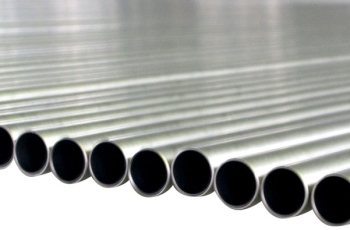
History of the Ti-3Al-2.5V Alloy Tube in aerospace
Titanium is one of the most plentiful elements on the earth’s surface, being fourth among the structural elements. Because of this abundance and the unique properties that titanium offers, it was the natural choice of aircraft designers to become the favored material for constructing airplanes. When compared on a strength-to-weight ratio basis, Titanium alloy has demonstrated superiority over most other structural aerospace materials. The low density, slightly over half that of steel, and high strength combination have increased titanium usage so that every modern military and commercial aircraft contains significant quantities of this material. Because of the very stringent demands of the aerospace industry, the development of many titanium alloys has occurred. These alloys greatly increase the strength of pure titanium while retaining the weight advantage. An alloy of titanium was needed as a tubing material that would decrease the weight of the hydraulic system while offering high-strength properties. The Ti-6Al-4V alloy was the first choice, as it was already the workhorse of this industry. Efforts to make tubing from this alloy were unsuccessful, so an alternate was sought. CP Titanium proved to be useful for ducting but did not have the strength for most hydraulic applications. A leaner alloy, using the same alloying elements as the Ti-6Al-4V, proved to be sufficiently malleable for tube manufacture and provided a very useful set of properties for application in hydraulic systems. This alloy, Ti-3Al-2.5V, can be cold worked by standard tube making processes, is weldable and can be strengthened by a combination of cold working and subsequent heat treatment to a wide range of strengths inductivities. Since the late 1960s the aircraft hydraulic systems have used more and more of this titanium alloy tubing. While unalloyed titanium is still used in some aircraft hydraulic tubing, most of the new hydraulic tubing applications…
More
 English
 French
 German